Coming soon
The Tredegar
Tarvin Sands, Cheshire · Plot 3 · Residential
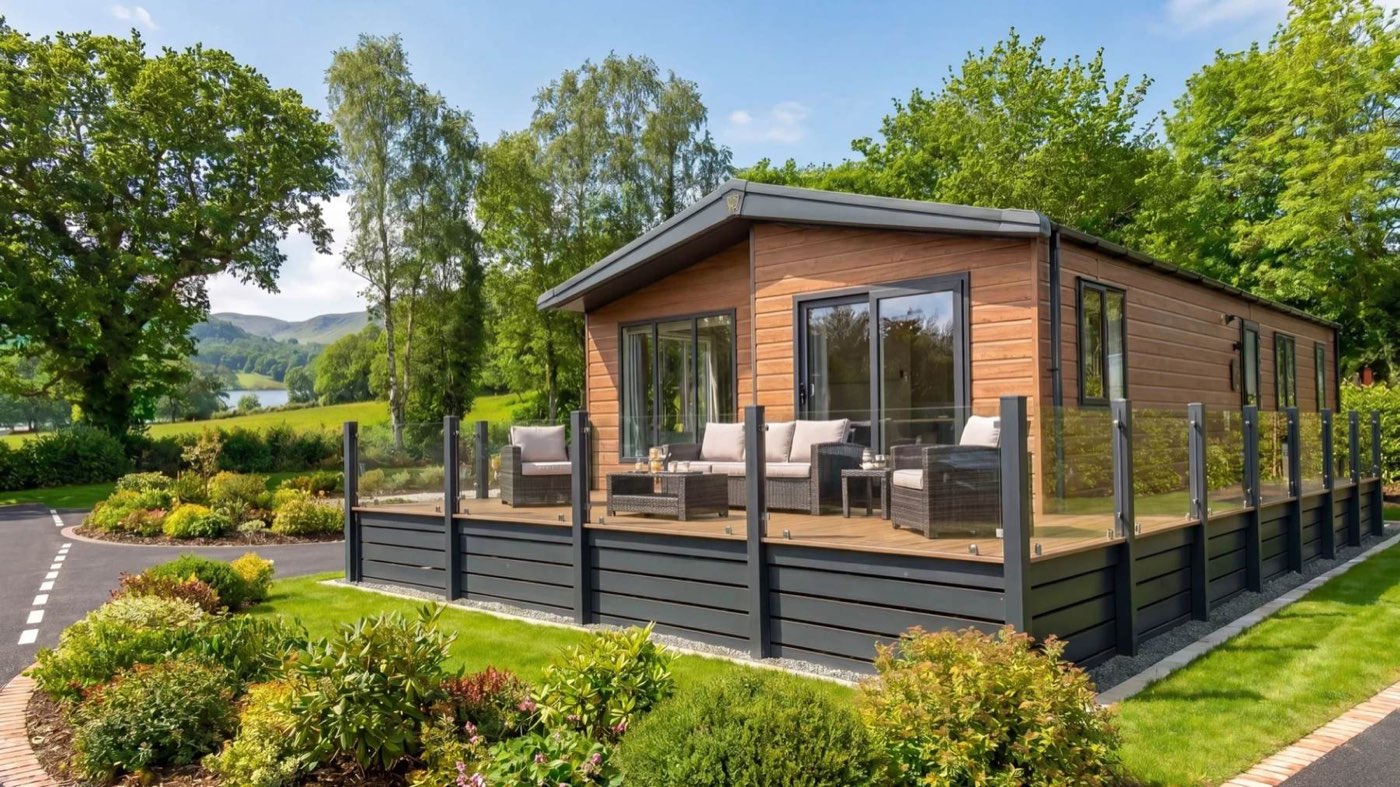
A two-bedroom Tredegar of 560 square feet on plot 3, coming to market at Tarvin Sands.
2 bed · 1 bath · 40 × 14 ft
£165,000guide price
Register interestCollection
A residential park home can be your only or main residence. It is held under a Mobile Homes Act 1983 agreement rather than a holiday licence, which gives you the right to keep the home on its plot indefinitely, an annual pitch fee review with notice and a right to challenge it, and the right to sell the home on the park with the park's commission capped by statute at ten per cent. You pay council tax, usually in Band A. The pitch fee on our residential parks is £3,000 a year.
Tarvin Sands, Cheshire · Plot 3 · Residential
A two-bedroom Tredegar of 560 square feet on plot 3, coming to market at Tarvin Sands.
2 bed · 1 bath · 40 × 14 ft
£165,000guide price
Register interestTarvin Sands, Cheshire · Plot 2 · Residential
A two-bedroom Highgrove of 800 square feet on plot 2, coming to market at Tarvin Sands.
2 bed · 1 bath · 40 × 20 ft
£225,000guide price
Register interestTarvin Sands, Cheshire · Plot 1 · Residential
A two-bedroom Hatfield of 900 square feet on plot 1, coming to market at Tarvin Sands.
2 bed · 1 bath · 45 × 20 ft
£250,000guide price
Register interestHound Hill, Hampshire · Plot 3 · Residential
A two-bedroom Highgrove of 900 square feet on plot 3, coming to market at Hound Hill.
2 bed · 1 bath · 45 × 20 ft
£285,000guide price
Register interestHound Hill, Hampshire · Plot 2 · Residential
A two-bedroom Hatfield of 900 square feet on plot 2, coming to market at Hound Hill.
2 bed · 1 bath · 45 × 20 ft
£300,000guide price
Register interestHound Hill, Hampshire · Plot 1 · Residential
A two-bedroom Chartwell of 900 square feet on plot 1, coming to market at Hound Hill.
2 bed · 1 bath · 45 × 20 ft
£315,000guide price
Register interestGuide prices. The annual pitch fee is on every listing, and so is what the park takes if you sell. To compare the whole portfolio, use the filters on the listings page.
This is the part of the market most often described badly. A park home sold as "residential" and a lodge sold as a "12-month holiday home" can be the same building from the same factory, sited fifty miles apart, and they are completely different purchases.
The difference is the agreement and the planning consent, not the specification. On a residential park you can live there. On a holiday park you cannot, however many months of the year the gates are open.
The right to keep your home on its plot for as long as the park has planning consent, which in practice means indefinitely. The agreement cannot simply be ended at the park's convenience, and the terms the Act implies override anything in the written agreement that conflicts with them.
A pitch fee review once a year, with at least 28 days' written notice, a prescribed form, and a right to refer it to a tribunal if you think it is unjustified. The park cannot raise the fee at will.
The right to sell the home on the park to a buyer of your choosing, with the park's commission capped at ten per cent of the sale price. The park can object to a buyer only on the grounds the Act allows.
And the written statement the Act requires, in your hands at least 28 days before you are asked to sign anything.
The rent of the land your home stands on, the drainage, and the upkeep of the park's common areas and roads. It is reviewed once a year under the Act.
Utilities are not in it. Gas, electricity and water are metered to your home and billed quarterly, as they would be in a house. Council tax is paid to the local authority, not to the park.
What is in it, and what is not, is set out in the written statement. Read that rather than this page, and take it to a solicitor.
Hound Hill in Hampshire and Tarvin Sands in Cheshire are the residential parks currently selling, with six homes between them. Beechwood Park in Derbyshire holds residential and holiday consent for 180 plots and has nothing released for sale yet.
Both selling parks are gated, with their own roads and parking beside each home. Each park page carries the facilities, the pitch fee, and the local list the parks team keeps: doctors, supermarkets, the station.
No stamp duty. You buy the home and not the land, so there is no land transaction for it to apply to. That saves a five-figure sum on a purchase at these prices.
A conventional mortgage is not available, for the same reason: there is no land for a lender to take security over. Specialist finance exists and we can introduce a lender authorised by the FCA if you ask. We do not arrange finance ourselves and we are not advisers on it.
Most residential parks set a minimum age, commonly fifty, and some are over-55 only. The park rules state it and you receive them before signing rather than after.
Dogs are allowed on every park in the portfolio. Numbers and the specifics are in the park rules.
Yes. That is the whole point of residential consent: the home can be your only or main residence, you register for council tax at that address, and you can register to vote there. A holiday lodge cannot be used that way whatever its specification.
Once a year, with at least 28 days' written notice on a prescribed form. The Act sets out what may and may not be taken into account, and you can refer a review you think is unjustified to the First-tier Tribunal.
Ten per cent of the sale price, capped by the Mobile Homes Act. On a holiday park it is 15% plus VAT, set by the licence rather than by statute, which is one of the real differences between the two.
Yes, like any other home, usually in Band A. A holiday lodge does not pay council tax; the park pays business rates on the pitch instead, and the pitch fee reflects that.
Neither. You own the home outright as a chattel and hold an agreement for the plot it stands on. There is no title to the land, which is why there is no conveyancing in the usual sense and no stamp duty.
A home built to BS3632 and properly maintained lasts as long as a conventional house of the same age. Every new home on these parks carries a ten-year structural warranty.
Nothing here is legal advice. The licence or Mobile Homes Act agreement, the park rules and the written statement govern, you receive them at least 28 days before signing, and we recommend a solicitor who knows park homes reads them. The buying guide sets out the whole process.
Strictly necessary cookies keep the enquiry form working, and are already on. Everything else — remembering your preferences, counting visits — stays off until you say yes. Read the cookie policy or the privacy notice.