What does a lodge cost to run for a year, once you own it?
Four bills, three of them from someone other than the park. The order they arrive in is the reason buyers are surprised by the total.
· 6 minute read
The short answer
A lodge costs you four things a year. The pitch fee, which on this site is £5,000 on a holiday plot and £3,000 on a residential one. Utilities, which are metered to your home and billed quarterly. Insurance on the home, which is yours to arrange. And council tax, on a residential home only, paid to the local authority rather than to the park. Only the first of those is a figure we can publish, because the other three depend on your home, your insurer and your council. Ask for all four in writing before you reserve.
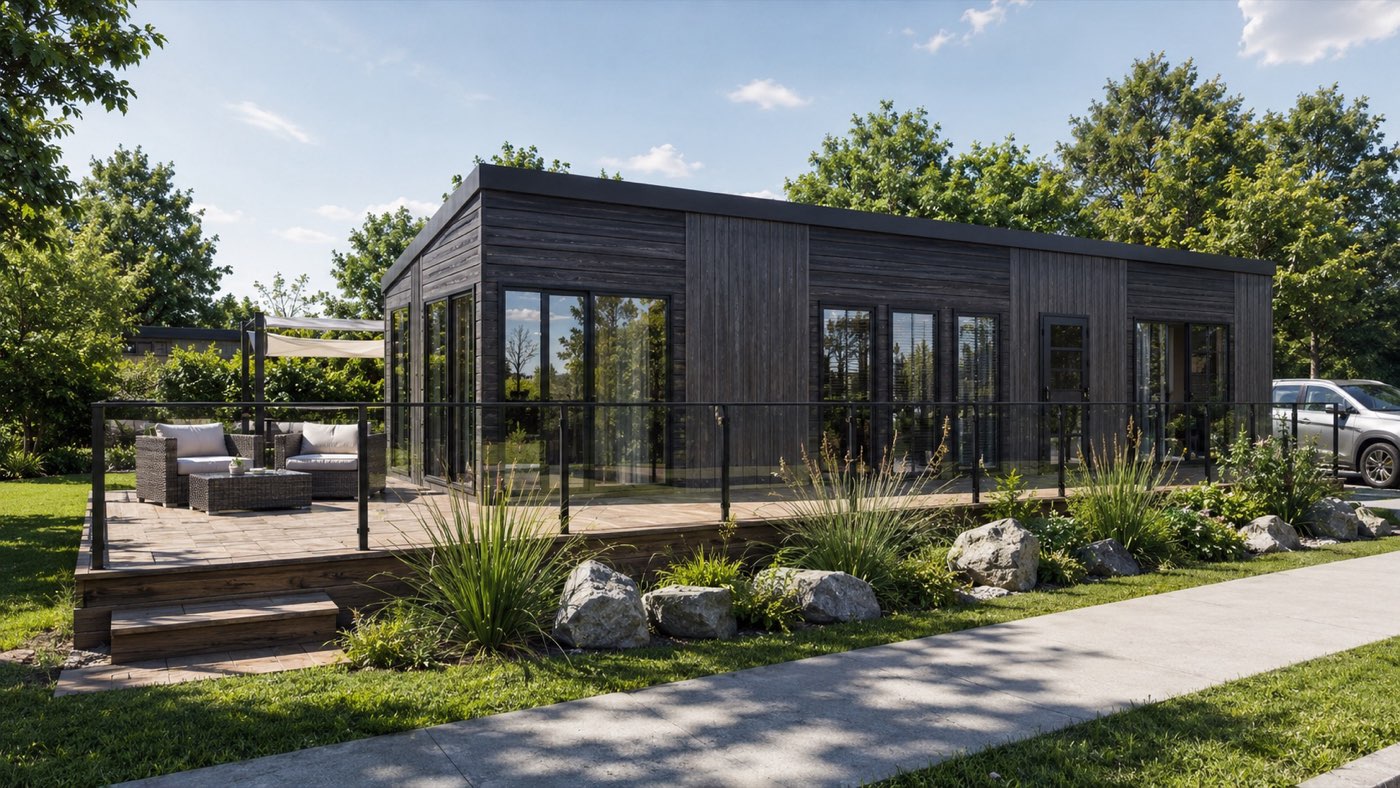
Which bills come from the park, and which do not?
One comes from the park: the pitch fee. It is the annual charge for keeping your home on its plot. It covers the rent of the land, the drainage, and the upkeep of the park's roads and common areas.
The rest do not. Gas, electricity and water are metered to your home and invoiced quarterly. The park passes on what you used rather than charging a flat rate. Insurance is a contract between you and your insurer. Council tax on a residential home goes to the local authority.
This matters because it changes who you ring when a figure looks wrong. It also means a park quoting you a single all-in annual figure is either including estimates it cannot stand behind, or leaving something out.
Why will nobody quote you a utility figure?
Because it would be a guess dressed up as a fact. A home used eight weeks a year is not the same bill as one lived in all year round. Nothing about the plot decides which you will be.
What you can get is the meter history for the plot, if a home has stood on it. Ask for the last four quarters. On a new plot there is no history, so ask the park what comparable homes on the same park use. That is a real answer and a park that keeps good records can give it.
The one thing worth checking before you buy is the heating. A home built to the current standard is insulated well, and that makes a large difference to a winter bill. The build standard guide explains what the standard requires.
Does a residential home really work out cheaper than a holiday one?
On the pitch fee alone, yes: £3,000 against £5,000. On the total, the gap closes, and presenting it as a £2,000 saving is the most common piece of bad arithmetic in this market.
A residential home pays council tax and a holiday one does not. A holiday park pays business rates on its pitches instead, which is part of why its fee is higher. Put council tax back into the comparison and the two land much closer together.
The honest way to compare is to write down all four bills for each option and total them. Not the pitch fee, and not a brochure figure. The pitch fee guide covers what each fee includes, which is the other half of this comparison.
How much can the pitch fee go up each year?
On a residential home the review happens once a year and the Mobile Homes Act controls it. The park gives you at least 28 days' written notice on an official form set by law, states the new figure, and gives its reasons. You can refuse it, and the park then has to apply to the First-tier Tribunal and justify it.
On a holiday plot the licence governs the review instead. There is no official form and no tribunal. That is a real difference between the two and it is worth reading the licence on this specific point before you reserve.
Either way, budget for the fee rising rather than holding. A buyer who can afford this year's figure and not a rise has bought at the edge of what they can carry.
What is the one cost people forget?
What it costs to leave. On a residential home the park's commission on a sale is capped by law at ten per cent of the price. On a holiday home the licence sets it, and here that is 15% plus VAT.
On a £250,000 sale that is £45,000 on a holiday licence against £25,000 on a residential agreement. It is not a running cost. It is the largest single number in the whole purchase, and it is set on the day you sign.
The selling guide works that comparison through properly. Read it before you reserve, not when you come to sell.
Questions people ask
Is heating included in the pitch fee?
+
No. Gas and electricity are metered to your home and billed quarterly, so you pay for what you use. The pitch fee covers the plot, the drainage and the park's roads and common areas rather than anything you burn.
Do I pay council tax on a holiday lodge?
+
No. A holiday lodge is not a dwelling for council tax, and the park pays business rates on its pitches instead. A residential home does pay council tax, usually in the lowest band, direct to the local authority.
Can the park make me insure through them?
+
No. The home is yours and you choose the insurer. A park can reasonably ask to see evidence that you hold cover, and several do. It cannot require you to buy the policy from it.
Are the utilities cheaper because the park buys in bulk?
+
Not necessarily, and treat the claim with care. What the park does is meter your home and pass on what you used. Ask what the unit rate is and how it is set, and ask for it in writing.
What happens if I cannot pay the pitch fee one quarter?
+
Speak to the park early, because silence is what turns a late payment into a problem. A payment arrangement is almost always available. On a residential park the park has to go to court to end your agreement and cannot act on its own.
This is general information and not legal advice. Where this page describes the law, it is the law as it stands in England. The GOV.UK lodges and bungalows factsheets are the place to check it. Your purchase is governed by the licence or Mobile Homes Act agreement, the park rules and the written statement. You get all of them at least 28 days before you sign. Have a solicitor who knows lodges and bungalows read them.